The dedicated running community in Waukesha County knows the value of our local outdoor spaces. Whether you’re training on the scenic Kettle Moraine trails or hitting the pavement in Delafield, Waukesha, Brookfield, or Oconomowoc, the sport of running often leads to common overuse injuries. Our physical therapy clinic is proud to serve runners from every city and village in the area. We specialize in effective physical therapy for runners, offering specialized runner’s knee treatment, IT band pain relief, and expert running form analysis.
For many runners, the pursuit of distance and personal bests is often interrupted by a familiar, frustrating ache—an overuse injury. Unlike acute trauma, these issues creep up slowly, sidelining you right when your training peaks.
At our clinic, we focus on correcting the underlying movement patterns, strength deficits, and training errors that lead to pain. It’s not just about managing symptoms; it’s about optimizing your entire stride for lifelong, injury-free running.
We’ve outlined the top three chronic running injuries we treat and how a tailored physical therapy plan, informed by advanced biomechanical analysis, gets you back on the pavement or dirt trail stronger than before.
1. Runner’s Knee Treatment: Fixing Patellofemoral Pain Syndrome (PFPS)
This is the most common running-related complaint, typically presenting as a dull ache around or behind the kneecap that intensifies when running downhill, climbing stairs, or sitting for long periods. PFPS is often a result of poor tracking of the kneecap due to weakness or imbalance in the hips and glutes, which causes excessive stress on the knee joint—a classic case of poor running biomechanics.
The PT Difference (Runner’s Knee):
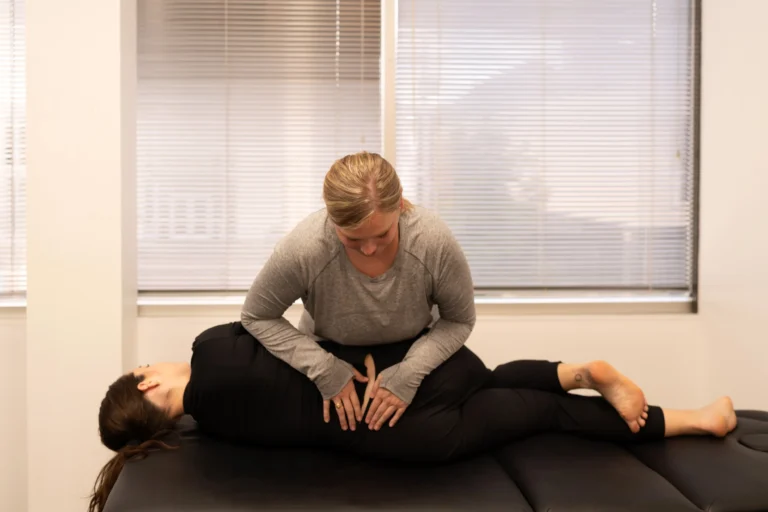
Effective runner’s knee treatment requires looking upstream at the kinetic chain. We use a combined approach of targeted hip- and knee-centered strengthening exercises (like single-leg squats, step-downs, and clamshells) to improve the stability of your pelvis and ensure the knee tracks correctly.
Treatment Focus:
We prioritize building gluteal strength (especially the gluteus medius) and incorporate hands-on manual therapy, alongside potential short-term solutions like custom
orthotics or therapeutic taping, to quickly reduce pain and allow you to initiate a safe strengthening program.
2. Treating IT Band Pain Syndrome (ITBS): Lateral Knee Relief
The Iliotibial (IT) band is a long, thick band of connective tissue running from the hip down the outside of the thigh to the knee. ITBS manifests as sharp, burning IT band pain on the outside of the knee, usually occurring predictably at a certain point in a run. It is rarely due to a tight IT band itself, but rather an overload condition driven by poor hip stability or training mistakes.
The PT Difference (IT Band Syndrome):
Treating IT band pain starts with load management and movement retraining.
Biomechanical Correction:
Our plan centers entirely on improving hip stability and control through exercises like side planks, lateral band walks, and single-leg bridges. A strong, stable hip prevents the femur (thigh bone) from rotating internally during the running stride, which is the primary cause of IT band irritation. We also analyze training logs to identify common culprits, such as running exclusively on banked roads or making sudden increases in mileage (poor training load).
3. Plantar Fasciitis: Expert Heel and Arch Pain Physical Therapy
Plantar fasciitis is the painful inflammation of the thick band of tissue (the plantar fascia) that runs across the bottom of your foot and connects your heel bone to your toes. For runners, this usually results in a stabbing pain on the bottom of the heel, especially with the first steps in the morning. Biomechanical factors like excessive pronation, high arches, or restricted ankle mobility are often contributors.
The PT Difference (Foot and Ankle Rehab):
Treatment focuses on restoring flexibility and building intrinsic foot strength.
Comprehensive Approach:
We utilize a combination of specific plantar fascia and calf stretching (including the crucial Achilles tendon), manual therapy (soft tissue massage), and strengthening exercises for the small muscles of the foot (e.g., towel scrunches, toe raises). We also provide expert guidance on proper shoe support, over-the-counter inserts, or prescription foot
orthotics to temporarily offload the painful fascia while long-term strength is developed.
Advanced Running Form Analysis and Biomechanics Screening
The key to resolving chronic running injuries and preventing future ones lies in understanding your unique movement signature. That’s why we offer specialized running form analysis and movement screenings—the gold standard for personalized physical therapy for runners.
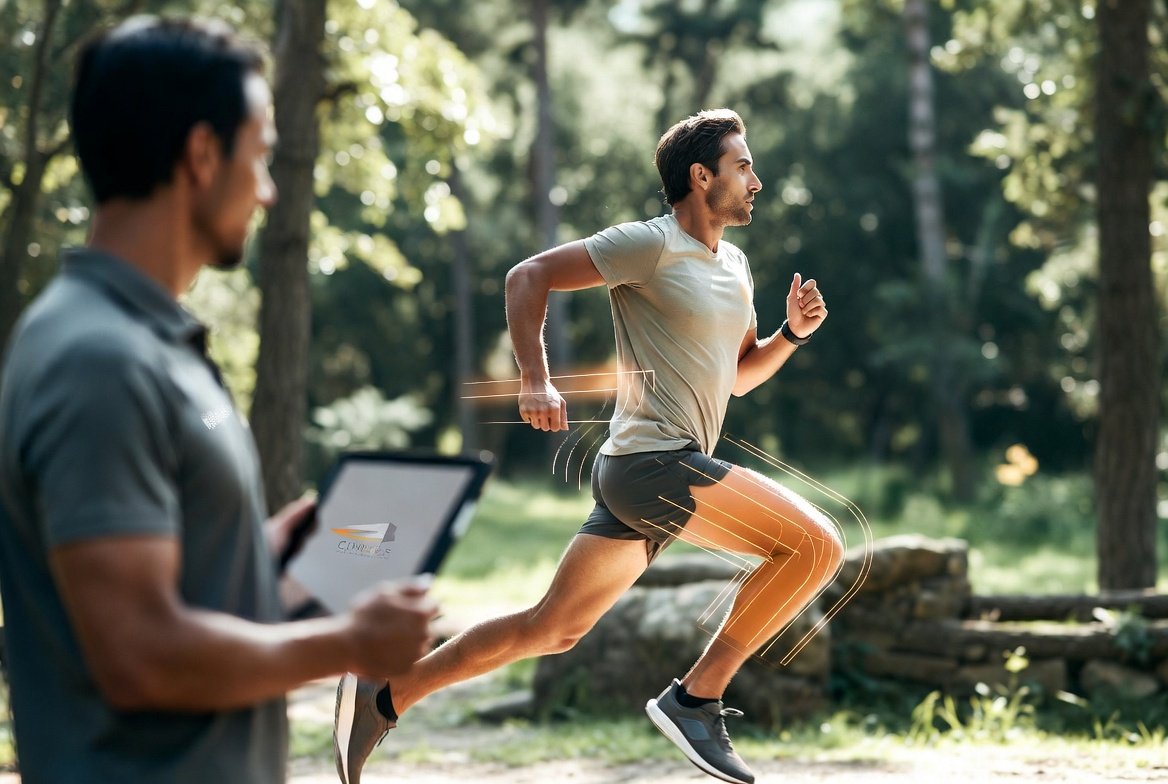
Using video technology and slow-motion analysis, our physical therapists break down every phase of your gait—from initial contact to toe-off. We assess critical factors like foot strike, running cadence (steps per minute), vertical oscillation, and hip stability to identify subtle inefficiencies or compensations that are leading to your pain in cities like New Berlin and Mukwonago.
This objective data allows us to create a truly individualized strengthening and retraining program, providing you with targeted cues (e.g., “shorter stride,” “lighter landing”) to make immediate and lasting changes to your running form.
Ready to get off the sideline and back onto the trails? Let us help you find the freedom of pain-free running in Waukesha County. Contact us today to schedule your comprehensive evaluation and gait analysis!